Englisch
  Deutsch
10 Short Questions with Helmut Gnaegi from DiATOME
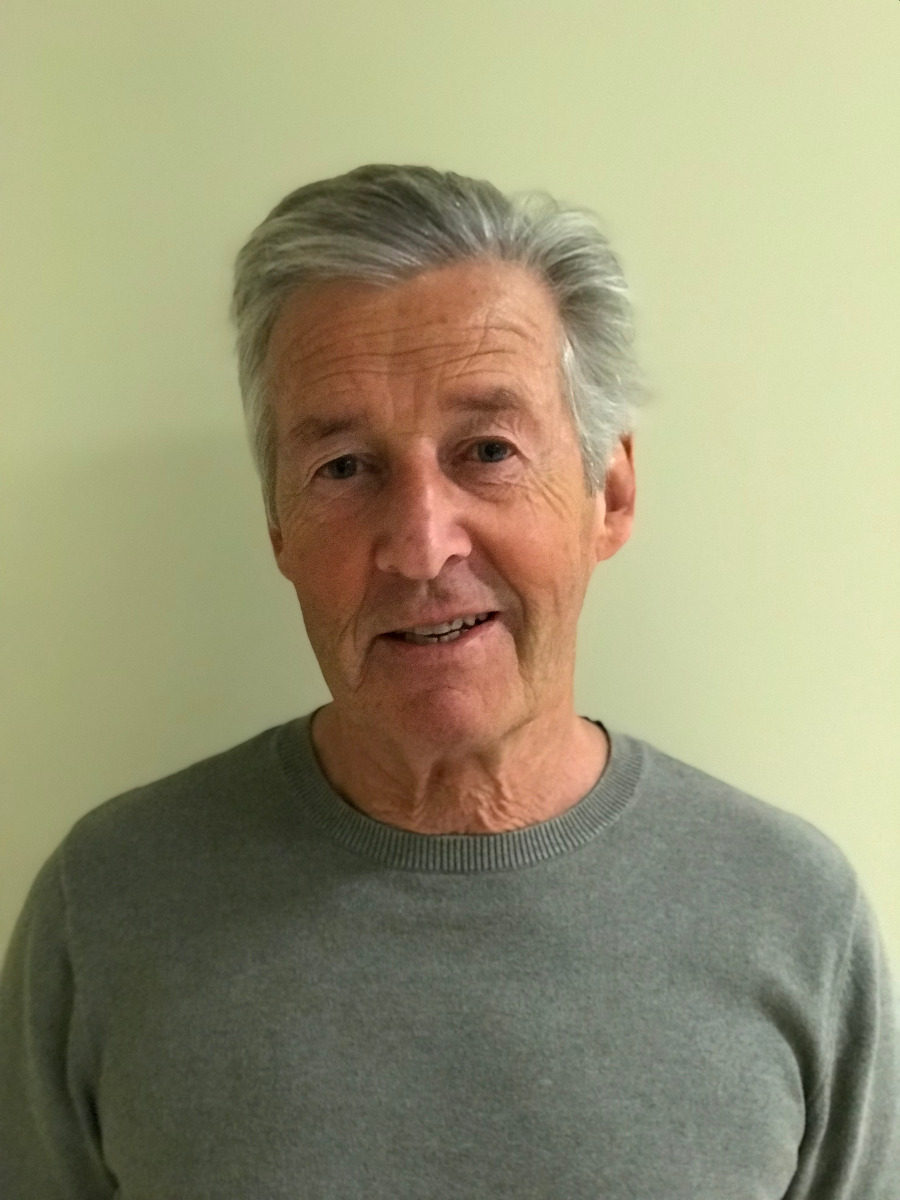
Helmut Gnaegi is co-founder of the company DiATOME (Biel, Switzerland).
The company was founded in 1970. Since 1980, he has regularly served as an instructor in ultramicrotomy courses. He has been and continues to be the driving force behind the development of all DiATOME knife types as well as accessories such as ionizers, manipulators, etc.
Of particular note is his collaboration with J. Dubochet in the field of cryo-EM from 1990 to 2010. In 2016, he was elected as an honorary member of the US Microscopy Society. He is a co-author of approximately 30 publications in the field of ultramicrotomy for Electron Microscopy.
- What are the three most challenging samples you have sectioned so far?
Soft wood, crystals, battery materials - What were the challenges?
Crystals can only be cut very thinly (20 nm and thinner). If cut thicker, the material turns to dust. It’s then no longer a cutting process, but a shattering process.
Soft wood can typically only be cut dry. When sectioned wet, the sample absorbs water and no sections can be obtained. If water is used, the cutting speed must be very high (100 mm/sec).
Battery materials often consist of a core of soft polymer and brittle carbon. The soft polymer core should be sectioned at cryo temperature. The brittle carbon turns to dust. - What are the most important tools needed for sectioning?
A trimming knife, an ultra knife for sectioning and an ionizer. - Do you recommend using the ionizer also at room temperature, and why?
Yes, even at room temperature, charging occurs. The friction of the knife on the sample block causes charging, which the ionizer prevents. - What are the three most common mistakes made when sectioning?
The most common mistakes are incorrectly approaching the knife to the sample, improper embedding of technical samples, and cutting sections that are too thick. - Are the diamonds used natural diamonds?
We use CVD single crystal diamonds. They are synthetic, laboratory-made diamonds. - Are synthetic diamonds softer or harder than natural diamonds?
A diamond is a diamond. There are no different diamond hardnesses. The physical properties are identical. - Is a resharpened knife just as good as a new knife?
Yes! Every knife, whether new or resharpened, goes through the same manufacturing steps and quality control. At the end of the process, you can no longer tell the difference between a new and a resharpened diamond. - What tips do you have for ultramicrotomy beginners who are just learning to section?
Be patient and keep at it!
The challenge for beginners is sitting at a stereo microscope, performing fine manual work, and feeling the distances while observing through the eyepieces. I recommend practicing knife approach and handling with old diamond knives until one is well trained and confident. - We always see you at many events. How many days a year are you on the road?
About one third of the time. - What still excites you about ultramicrotomy?
I’m still excited to learn about new applications and to help shape the further development of diamond knives. - How do you balance out the stressful "DiATOME life?"
There is no stress at DiATOME. Still, I relax by hiking and gardening.