Englisch
  Deutsch
Alternatives to Uranyl Acetate for Sample Staining in Electron Microscopy
Why Alternatives to Uranyl Acetate Are Becoming Increasingly Important
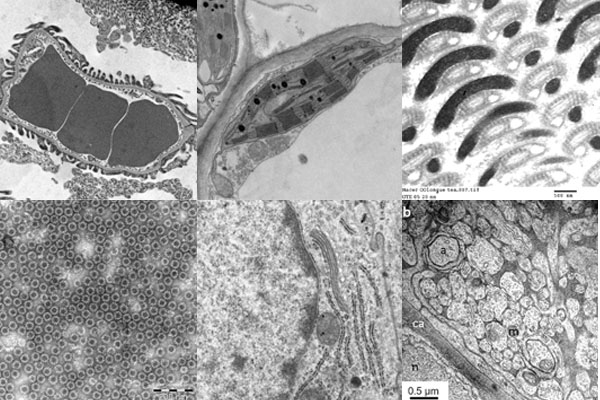
Due to radioactivity, toxicity, and growing regulatory restrictions, many laboratories are now facing the challenge of replacing conventional uranyl-based stains with non-radioactive, safer, and regulation-compliant alternatives. The goal is to achieve comparable image quality without compromising contrast, resolution, or reproducibility.
Modern uranyl acetate alternatives offer practical solutions for research, routine, and diagnostic laboratories. They enable safer handling, simplified storage, and easier disposal, while significantly reducing administrative burden related to radiation protection.
It is important to note that staining reagents are not directly interchangeable on a 1:1 basis. When switching from uranyl acetate to alternative stains, incubation times, concentrations, pH values, and washing steps must be optimized. Only well-adjusted protocols ensure consistent and meaningful results.
In addition, depending on the specimen and reagent used, artifacts may occur, including swelling, shrinkage, precipitation, or apparent particle size changes due to stain deposition.
Scientifically Validated Evaluation of Uranyl Acetate Alternatives
A key decision-making resource is the recently published study Systematic Comparison of Commercial Uranyl-Alternative Stains for Negative- and Positive-Staining Transmission Electron Microscopy of Organic Specimens, published in Advanced Healthcare Materials.
This publication presents the first systematic comparison of commercially available, non-radioactive uranyl acetate alternatives. Both negative and positive staining of various organic specimens were evaluated under different conditions and directly compared with uranyl acetate.
The results provide a practical, scientifically sound basis for selecting suitable TEM staining agents. They demonstrate that alternative reagents can exhibit significantly different performance profiles depending on the application scenario, making careful evaluation essential.
In the following overview, we have structured and summarized the key findings of the study for the uranyl acetate alternatives available from us:
|
|
|
Ultrathin |
Lipid |
Biological |
Globula |
Fibrillar |
Nucleic |
Organic polymers |
|||
|
Substance |
pH |
A549 cells |
POPC Liposomes |
Flu A lipid |
Flu A on |
Flu A on Carbon |
Ferritin |
PK amyloid Core |
Influ RNA |
PMMA |
PMMA with |
|
Uranyl Acetate mixed as 2% solution |
4.2-4.6 |
|
|
Res |
Res / |
Vis / |
Size / |
|
Vis / |
Size |
Vis |
|
Phosphotungstic Acid (PTA) #E19500 mixed as 2% solution |
7.5 |
|
|
|
|
Res |
|
|
|
Dist |
Dist |
|
Stain 77 1% aqueous solution |
7.6 - 8.2
|
|
Con |
|
|
|
|
Res & Dist |
|
Shrink |
Shrink |
|
UAR (UA-Replacement) aqueous solution |
7
|
Con / |
|
Con / |
Res & |
Res / |
Res / |
|
Vis / |
|
|
|
UranyLess 3% aqueous solution |
6.8 - 7 |
|
Res / |
Res / |
Vis / |
Vis / |
|
|
Vis / |
Shrink |
Shrink |
|
|
|
|
|
|
|
|
|
|
|
|
|
|
Legend for |
|
Staining Performance |
|
|
|
|
|
|
|
|
|
|
Contrast |
Con |
comparable or superior |
+ |
|
|
|
|
|
|
|
|
|
Distribution |
Dist |
sufficient |
0 |
|
|
|
|
|
|
|
|
|
Particle Visibility |
Vis |
insufficient |
- |
|
|
|
|
|
|
|
|
|
Precipitation |
Precip |
|
|
|
|
|
|
|
|
|
|
|
Resolution |
Res |
|
|
|
|
|
|
|
|
|
|
|
Shrinking |
Shrink |
|
|
|
|
|
|
|
|
|
|
|
Size Accuracy |
size |
|
|
|
|
|
|
|
|
|
|
Particularly noteworthy are phosphotungstate-based solutions such as PTA and Stain 77. The authors identified these products as especially promising alternatives. A likely explanation for their strong contrast performance is the high atomic number of tungsten (74), compared to lanthanides (62–70), resulting in high electron density and pronounced contrast.
The newly available Stain 77 demonstrated the best overall performance in the study and was validated as a promising universal alternative to uranyl acetate. Its convincing results in both positive and negative staining, including proteins and ultrathin sections, as well as the long-term stability of stained specimens highlight its potential to become a new standard for initial TEM analyses.
Conclusion
Today, selecting the appropriate staining agent is no longer a compromise between safety and image quality. Instead, it represents a strategic decision based on scientific evidence and application-specific requirements.
Coffee as an Innovative TEM Stain
In addition to commercially available uranyl acetate alternatives, the publication Coffee – a ubiquitous substitute for uranyl acetate in staining of biological ultrathin sections for electron microscopy studies, published in Elsevier Methods, describes an unconventional yet scientifically grounded approach: Coffee as a staining agent for TEM.
The staining effect is primarily attributed to polyphenols, particularly chlorogenic acid and tannins. Their phenolic groups interact with biological macromolecules and locally increase electron density. Although the achieved contrast intensity does not reach the level of uranyl acetate in all applications, the study convincingly demonstrates that even non-metallic organic compounds can enable differentiated ultrastructural visualization.
This approach expands the spectrum of uranyl alternatives by introducing a fundamentally different chemical strategy and illustrates the innovation potential in TEM staining.
Interview on Coffee Staining
In addition to the scientific background, our exclusive interview with the first author, Claudia Mayrhofer (FELMI, Graz, Austria), provides deeper insights into Coffee Staining and the future of uranyl acetate-free TEM staining methods.
Read the Interview
Substitutes for Uranyl Acetate

Tungsten Based Substitutes
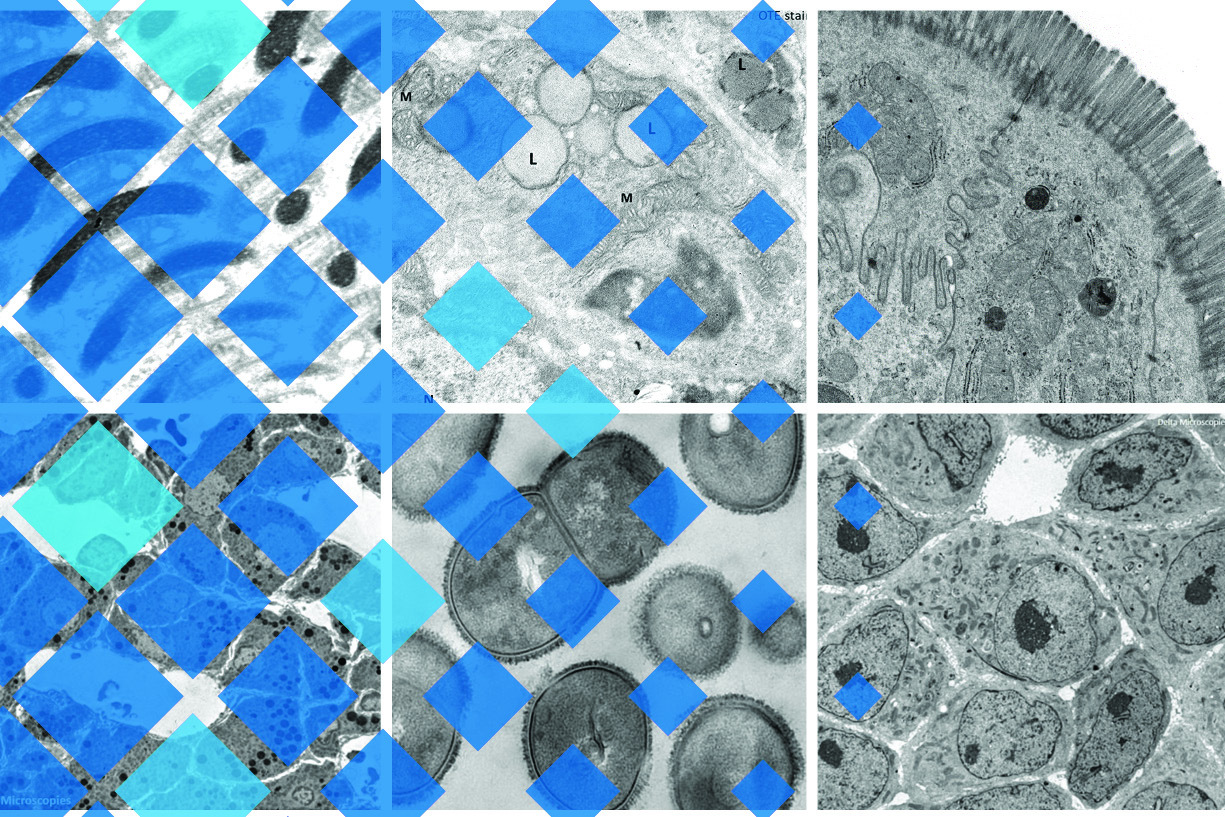
Phosphotungstic acid (PTA) has been successfully used for many years as a staining agent for negative staining of biological specimens in TEM. Due to its high electron density, it enables clear and high-contrast visualization of fine structures such as viruses, proteins, macromolecules, nanoparticles, and bacterial surfaces. Particularly in virological research, phosphotungstic acid has become established as a reliable routine reagent.
Compared to classical uranyl acetate and uranyl formate, phosphotungstic acid offers the advantage of significantly lower toxicity and easier laboratory handling. It is typically applied as an aqueous solution in a concentration range of 0.5–3%, with the pH adjusted according to the specific specimen. This flexibility allows optimized adaptation to different sample types.
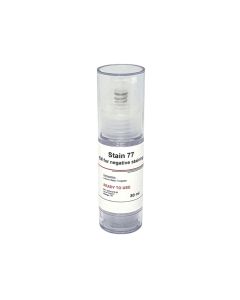
With Stain 77, a ready-to-use solution based on lithium tungstate is now available. Its optimized formulation is designed for a broad range of applications and delivers outstanding results, including in the staining of ultrathin sections. Thanks to its high level of reproducibility, it is particularly advantageous for routine laboratories and standardized workflows.
-
Starting at €56.00 €66.64
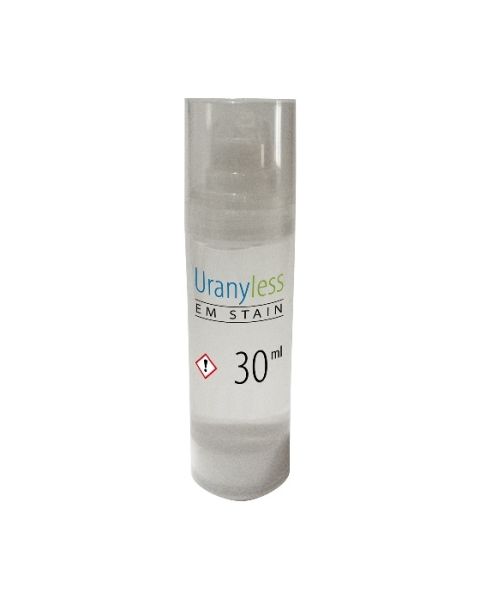
Uranyless is a non-radioactive staining reagent as alternative to uranyl acetate. An optimized lanthanide Mix allows fast staining times. Uranyless is suitable for classical and negative staining procedures. The 30ml dispenser bottle is sufficient for staining of up to 1500 TEM grids.
UranyLess in 30% Ethanol is recommended for dense and lipid-rich tissue which is difficult to stain.
UranyLess in Acetone is used for contrasting cryo-fixed tissue during freeze substitution.Recommended for use with Lead Citrate (#DM22410).
We give you a round of extra strong contrast! 20% discount on UranyLess until 12.04.2025
Starting at €56.00 €66.64
-
 €66.60 €79.25Art.Nr: DM22409-50
Stain77 is an innovative, low-toxicity reagent based on lithium tungstate for positive and negative staining of samples in electron microscopy applications. It serves as a safe and efficient alternative to uranyl acetate. Stain77 is light-insensitive and can be stored long-term at room temperature.
€66.60 €79.25